Semantic Segmentation Services
Unlock Image and Video Data Insights through Precise Pixel-Level Analysis with Semantic Segmentation Services
What is Semantic Segmentation?
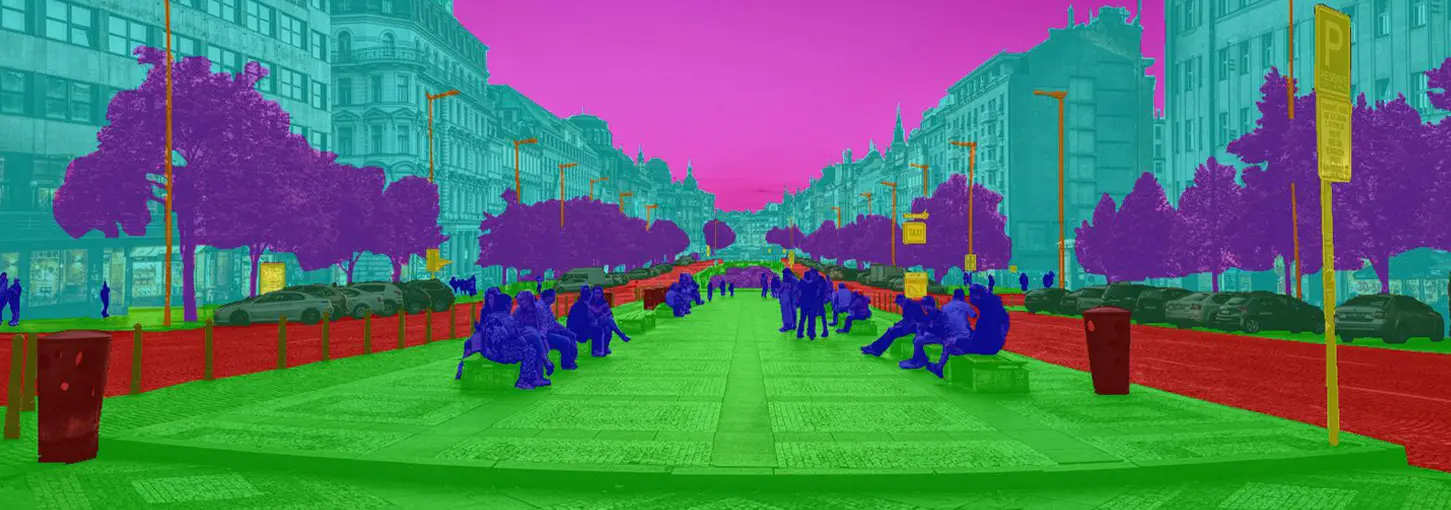
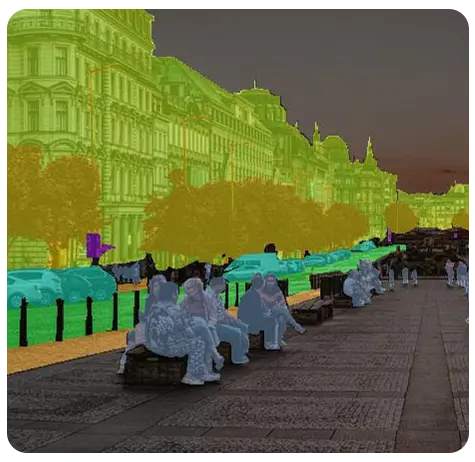
Semantic segmentation is a computer vision technique that involves dividing an image or video into different segments and assigning a label to each segment. The labels represent the objects or parts of objects present in the image or video, providing a detailed understanding of the scene. At NextWealth, we offer comprehensive semantic segmentation services, ensuring precise object classification and enhanced AI model performance. With expertise in both 2D semantic segmentation and 3D semantic segmentation, our annotation experts deliver high-quality labeled datasets for AI applications.

Our Semantic Segmentation Services
We offer a range of semantic segmentation services to help organizations unlock the full potential of image and video analytics.
Image Segmentation
Video Segmentation
Object Detection and Tracking
Image and Video Annotation
Our Semantic Segmentation Services

Image Segmentation
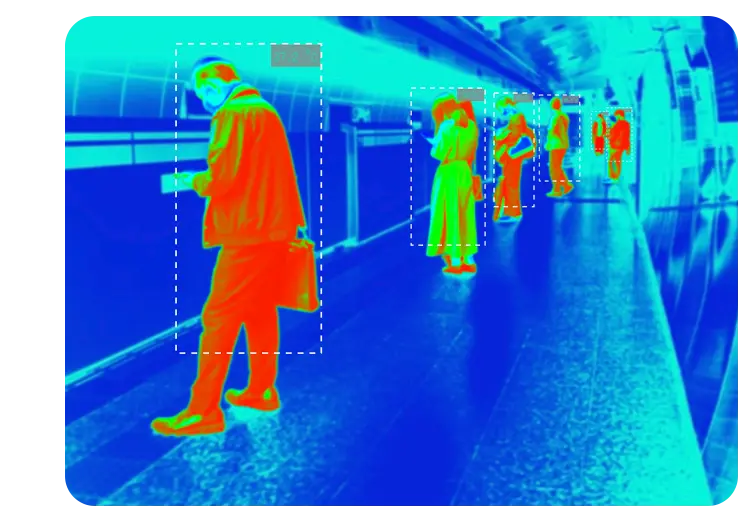
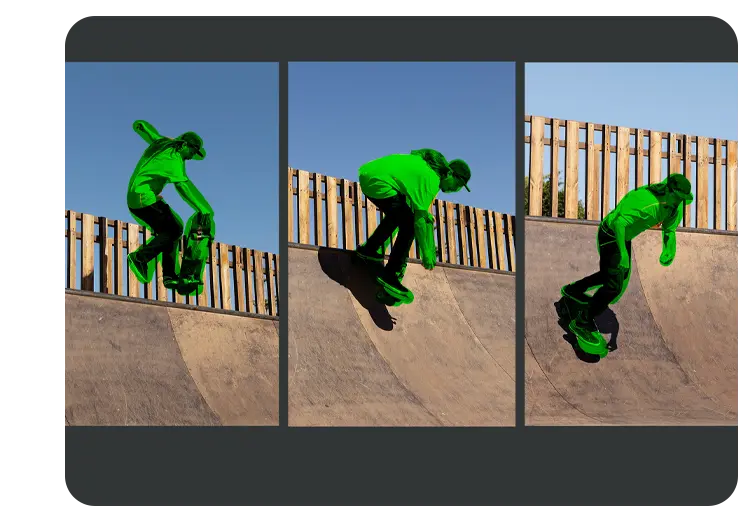
Our semantic image segmentation services help analyze and categorize objects within images, enhancing AI models with structured data for improved object recognition. We provide high-quality image semantic segmentation solutions to help businesses train deep learning models efficiently.
Video Segmentation
Our video segmentation services allow frame-by-frame analysis, ensuring accurate classification of objects over time. With advanced semantic segmentation annotation, we help businesses achieve superior AI-driven video analytics.
Object Detection and Tracking
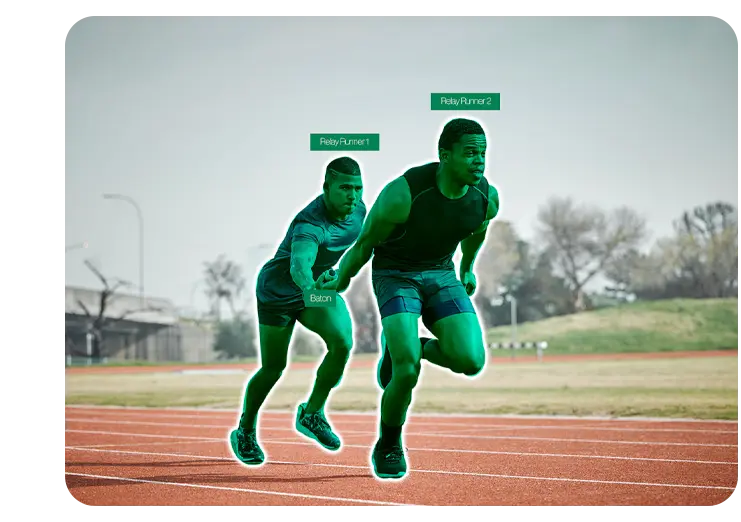
Our semantic segmentation object detection services help identify, locate, and track objects in images and videos, delivering valuable insights into object movement, spatial relationships, and behavior tracking.
Image and Video Annotation
Our semantic segmentation annotation services help label and categorize objects in images and videos, ensuring a granular level of detail for AI-powered applications. Our annotation experts specialize in delivering structured datasets for deep learning-based object recognition.

How Does Semantic Segmentation Differ from Object Detection?
Semantic segmentation and object detection are two related but distinct computer vision techniques.
- Semantic segmentation involves dividing an image into multiple segments and assigning a label or category to each pixel. The goal of semantic segmentation deep learning is to achieve pixel-level accuracy for AI models.
- Object detection, on the other hand, focuses on identifying and localizing objects within an image, helping AI models recognize specific elements while providing their location and size.
By combining semantic segmentation object detection techniques, AI models can gain a deeper understanding of complex scenes, improving self-driving cars, healthcare imaging, and industrial automation systems.
Want to optimize AI models with precise image segmentation self-driving car solutions?
Real-World Applications of Semantic Segmentation
Our semantic segmentation technology is widely used across industries such as autonomous vehicles, medical imaging analysis, precision agriculture, and smart retail solutions. By leveraging 2D semantic segmentation and 3D semantic segmentation techniques, we enhance AI-driven decision-making.
Healthcare

We offer advanced semantic segmentation deep learning solutions to accurately identify and categorize medical objects, such as bones, organs, and tumors in X-rays, CT scans, and MRI images. With expert-driven semantic segmentation annotation, we help improve diagnostics and treatment accuracy.
Retail

Our semantic segmentation deep learning techniques provide valuable insights into consumer behavior by analyzing images and videos of products and customer interactions. By integrating AI-powered semantic segmentation services, businesses can refine marketing strategies and enhance customer experience.
Transportation & Self-Driving Cars

We offer advanced semantic segmentation technology to analyze real-world road conditions for self-driving vehicles. Our image segmentation self-driving car services help autonomous systems detect lanes, traffic signals, pedestrians, and road obstructions with pixel-level accuracy.
Agriculture

Our 3D semantic segmentation services utilize drone-captured images and videos to provide a detailed understanding of crops and fields. With precise polygon annotation and semantic segmentation annotation, we help streamline AI-powered crop monitoring and yield optimization.
Ready to start your Semantic Segmentation project?
Talk To Our ExpertSuccessful client stories and case studies
Deep dive into our journey of partnering with the global business giants.


Why partner with us
Our services are tailored to elevate the efficiency of your AI/ML processes
Managed Services l Captive Services l Staffing Services
5,000+
Skilled
Employees
1B+
Data
Transactions
40+
Live Projects
10+
Fortune 500
Clients
73
NPS Score
Testified and trusted by
the best in the world of business
I am really happy at all the great things we have been able to achieve in the past 1 year. The relationship now has a solid foundation, and I am sure NextWealth will continue to be a formidable partner going ahead, bringing a delightful experience for our customers.
NextWealth has been an invaluable partner to us, significantly accelerating our growth by handling critical data operations and providing strategic insights.
NextWealth’s hard work and dedication are truly making a difference, streamlining our processes significantly. We really appreciate it!
My experience with NextWealth has been wonderful. The diligent team consistently delivers on time with a focus on quality. Their innovation-driven mindset fosters a win-win situation for both teams.
I am happy with the improvement in the performance. I have seen positive improvement, and we have a long way to go.
NextWealth’s in-depth analysis helped us pinpoint exactly what needs to be done to address the issues.
With excellence in Quality, Cost, and TAT—key pillars of any operation—NextWealth sets a benchmark for operational efficiency and beyond.
We have experienced significant growth—a success we could not have achieved without the expert support, hard work, and commitment of NextWealth.
Explore Resources
Know how we are accelerating business growth by enabling effectiveness in AI/ML

RLHF for Enterprise LLMs: Services, Costs, and How to Choose the Right Partner
1 min read

Enterprise Data Annotation in 2025: Platforms, Pipelines, and Getting Both Right
1 min read
Latest Update

Best Data Annotation Companies for AI Training in 2025–26: The Complete Buyer’s Guide
1 min read
FAQs
Why do we need semantic segmentation for autonomous driving, while recognition/detection is enough?
Semantic segmentation goes beyond recognition and detection by providing a detailed and nuanced understanding of the objects in an image or video. It not only identifies the presence of an object but also categorizes every pixel in the image into its respective object class, thereby providing a complete and dense map of the environment.
In autonomous driving, this level of detail is crucial for making informed decisions, such as determining the best path to take based on the layout of the road and objects surrounding the vehicle, or accurately detecting and classifying objects in the scene to avoid collisions. Recognition and detection alone may not provide enough information to make these decisions, especially in complex and dynamic environments.
Therefore, semantic segmentation is an essential component in the development of autonomous vehicles, as it enables the vehicle to have a deeper understanding of its surroundings and make informed decisions.
What is semantic segmentation in machine learning?
Semantic segmentation is a computer vision technique in machine learning that involves dividing an image into multiple segments, each of which is then assigned a semantic label that describes the category of the objects present in that region. It is a form of deep learning that uses algorithms to analyze and categorize the pixels in an image. Semantic segmentation deep learning allows for a pixel-level analysis of the image data, providing a more in-depth and detailed understanding of the objects and things present in an image or video. This information can then be used to solve various computer vision problems, such as object recognition and categorization, image classification, and scene understanding.
What is the role of semantic segmentation in AI-powered deep learning models?
Semantic segmentation enables AI-powered deep learning models to classify and segment objects at a pixel level, providing a detailed understanding of an image or video. This technique improves object detection, scene recognition, and spatial awareness, enhancing AI performance in applications such as medical imaging, autonomous driving, and industrial automation. By leveraging high-precision segmentation, deep learning models achieve superior accuracy in complex visual analysis tasks.
What is the importance of semantic segmentation in self-driving car technology?
Semantic segmentation is critical for self-driving cars as it allows AI to interpret road environments by accurately distinguishing lanes, vehicles, pedestrians, and obstacles. By segmenting each element in a scene, autonomous vehicles gain a comprehensive understanding of traffic conditions, enabling real-time decision-making. This ensures precise navigation, enhances safety, and optimizes route planning in dynamic driving scenarios.
How can businesses leverage semantic segmentation services for AI automation?
Businesses can use semantic segmentation services to automate AI-driven processes such as quality inspection, retail analytics, and surveillance monitoring. By providing AI with detailed object segmentation, models can perform accurate defect detection, customer behavior analysis, and security threat identification. High-quality segmentation enables seamless automation, improving operational efficiency and decision-making across industries.
FAQs
Can NextWealth provide semantic segmentation services for both 2D and 3D data?
Yes, NextWealth offers both 2D and 3D semantic segmentation services. Whether you’re working with standard images or complex 3D point clouds (from lidar or satellite imagery), they can segment and label every pixel or voxel in the data, allowing your models to learn from rich, detailed datasets for more accurate real‑world decision-making.
How does semantic segmentation differ from object detection?
While object detection identifies and localizes objects (drawing boxes around them), semantic segmentation goes a step further by assigning a class label to every pixel, producing a complete map of all object categories in the image. This detailed labeling helps models better understand scene structure and relationships between objects
How do I know if semantic segmentation is the right approach for my project?
If your project involves detailed image understanding, like identifying the exact boundaries of objects, distinguishing between similar objects, or analyzing complex scenes, semantic segmentation is likely the best choice. It’s particularly beneficial for applications where pixel-level accuracy is crucial, such as in medical imaging, autonomous systems, or precision agriculture.
How does semantic segmentation improve the performance of AI models?
Semantic segmentation enhances AI model performance by providing high-quality, pixel‑level labeled data, which allows models to better understand the relationships between objects in a scene. This is especially beneficial for tasks like autonomous navigation, medical image analysis, or object recognition where contextual understanding is critical for success.
Can semantic segmentation be applied to both still images and videos?
Yes, semantic segmentation can be applied to both still images and videos. For videos, frame-by-frame segmentation is done, allowing models to track objects and actions over time. This is especially useful for tasks such as real-time surveillance, motion tracking, or activity recognition.
How does semantic segmentation help improve AI models for real-time applications?
By providing highly accurate, pixel-level labeled data, semantic segmentation enables AI models to better understand real-time environments. This is especially crucial for applications like autonomous driving, where precise real-time object detection, road condition analysis, and hazard recognition are needed to make split-second decisions.
What makes NextWealth’s semantic segmentation services different from other providers?
NextWealth stands out by combining advanced annotation tools with Human-in-the-Loop (HITL) processes to ensure high precision, even in complex scenarios. Additionally, they provide a customized approach for each project, offering flexibility in annotation types, quality assurance steps, and project scaling, ensuring that your specific needs are met.
How can semantic segmentation help with training deep learning models?
Semantic segmentation provides high-quality, pixel-level annotated datasets that are ideal for training deep learning models, especially for tasks requiring spatial awareness, such as image segmentation, scene understanding, and object recognition. The detailed annotations help models learn fine-grained patterns in images or videos, improving overall model accuracy.
Why is Human-in-the-Loop necessary for complex video or image segmentation tasks?
In tasks with overlapping objects, occlusions, or ambiguous boundaries, automated tools often struggle to make accurate judgments. Human-in-the-Loop ensures these scenarios are handled with expertise, where trained annotators can interpret the nuances of each pixel, ensuring that the segmentation is not only accurate but also meaningful in real-world contexts. This process enhances model training by providing detailed annotations for complex environments.
How does NextWealth manage quality assurance for semantic segmentation datasets?
NextWealth uses multi‑stage quality checks that include human reviews, guideline validations, and consistency audits. Their approach ensures that each pixel label meets strict quality standards, reduction of annotation errors, and improves model training outcomes in downstream tasks.
Why Choose NextWealth?

Quality Assurance

Scalability

Data Security